
Foreign investors pulled nearly $50 billion from Asian stock markets in October 2026 as concerns over artificial intelligence spending increased. Rising cash burn at major technology companies and possible regulatory restrictions also weakened investor confidence across the region.
The sell-off hit technology-heavy markets, particularly Taiwan and South Korea, where investors reduced their holdings in semiconductor and AI-related stocks. Data from the London Stock Exchange Group (LSEG) showed net foreign equity outflows of $49.77 billion across seven Asian markets in October.
This marked the region’s largest monthly foreign investment withdrawal since June 2026, highlighting growing concerns about AI infrastructure spending. Investors are increasingly questioning whether major technology companies can generate enough revenue to justify their massive AI infrastructure investments.
Foreign selling has also continued in November, with another $22.6 billion leaving these Asian equity markets so far. A Reuters report published on November 11, 2026, shows the continued withdrawals amid growing concerns over AI spending and investment returns.
Taiwan and South Korea Lead Asia’s Foreign Stock Market Outflows
Taiwan and South Korea recorded Asia’s largest foreign equity outflows in October as investors reduced their stock market holdings. Foreign investors withdrew a net $30.68 billion from Taiwanese stocks during October, marking a record monthly outflow.
This was Taiwan’s largest foreign equity withdrawal since January 2008, highlighting growing concerns among overseas investors. South Korea also experienced heavy selling, with foreign investors pulling approximately $14.59 billion from its equity market.
The withdrawals reflect growing investor concerns about technology stocks, particularly companies linked to semiconductors and artificial intelligence infrastructure. Foreign selling has continued into November, adding further pressure on both Asian equity markets.
Taiwan has recorded another $19.76 billion in foreign equity outflows so far this month, while South Korea lost approximately $8.32 billion. Both countries have strong links to the global semiconductor supply chain and manufacture hardware used in AI data centres.
However, uncertainty surrounding future AI infrastructure spending has raised concerns about technology valuations and expected corporate earnings.
ALSO READ: AI Stocks Drop After Tech Leaders Call for Slower AI Development
Investors Question Returns as Big Tech Increases AI Infrastructure Spending

Growing doubts about the profitability of artificial intelligence investments have emerged as a major reason behind the recent stock market selloff. Major technology companies, especially large cloud providers, are spending billions of dollars to expand their AI infrastructure.
Their investments cover advanced processors, servers, data centres, electricity systems, and networking equipment needed to support AI services. However, investors are questioning whether future revenue from AI services will cover these rising infrastructure costs.
Increasing capital expenditure and cash burn have also raised concerns about the financial risks of expanding AI operations. Wael Makarem, lead financial market strategist at brokerage firm Exness, linked the withdrawals to growing concerns about AI infrastructure spending and profitability.
He said investors were reducing their exposure to AI-related investments as doubts about future returns continued to increase. These concerns have also affected Asian stock markets, where major semiconductor and technology companies supply hardware for AI infrastructure.
ALSO READ: AI Company Burn Rate Statistics 2025-2026
US AI Regulations Raise Concerns Over Data Centre Expansion
Possible changes to US AI regulations have created additional uncertainty for investors concerned about future technology investments. Ahead of the US midterm elections, investors worried that stricter environmental reviews could delay new data centre projects.
Additional AI regulations could also slow data centre construction and reduce demand for advanced semiconductors and related equipment. Recent Democratic victories in several states have kept these concerns alive, particularly where opposition to new data centres continues growing.
Investors are now assessing whether tighter environmental rules and regulatory oversight could affect major technology companies’ expansion plans. These concerns have added pressure on Asian technology stocks, especially markets heavily dependent on semiconductor exports and AI infrastructure demand.
Asian Stock Markets Underperform Global Equities Amid Foreign Investor Sell-Off
Foreign investor withdrawals came as Asian stock markets recorded steeper losses than global equities during October 2026. The MSCI Asia Pacific ex-Japan index dropped 6.91% in October, significantly underperforming broader international stock market benchmarks.
By comparison, the MSCI All Country World Index declined just 1.69% during the same period. The wider gap indicates that investors reduced their exposure to Asian equities more sharply than global stocks.
Scarlett Liu, Asia-Pacific equity derivatives strategist at BNP Paribas, said international investors may have favoured US stocks over Asian markets. The relative strength of US equities may have encouraged investors to move their money away from Asian stock markets.
Rising US Treasury yields may have also influenced investment decisions, making government bonds more attractive to investors. The yield on 10-year US Treasury securities reached 5.3% in early October, increasing the appeal of these investments.
Foreign Investors Return to Indian Stocks With $5.68 Billion in November Inflows
India experienced foreign investor withdrawals for the second consecutive month in October, adding pressure to its equity market. Foreign investors withdrew a net $3.6 billion from Indian stocks during October, raising concerns about overseas investment trends.
However, foreign investment flows have reversed in November, with Indian equities attracting approximately $5.68 billion in net inflows. HSBC has also upgraded its outlook for Indian equities to overweight, citing stronger corporate earnings and more reasonable valuations.
Herald van der Linde, HSBC’s head of equity strategy for Asia Pacific, said Indian stocks offer better investment opportunities. He pointed to the country’s earnings outlook and stock valuations as key reasons behind the improved market assessment.
Meanwhile, several other Asian markets recorded comparatively smaller changes in foreign investment flows during October.
| Asian Market | October 2026 Foreign Investment |
| Taiwan | $30.68 billion |
| South Korea | $14.59 billion |
| India | $3.6 billion |
| Indonesia | $938 million |
| Thailand | $199 million |
| Vietnam | $122 million |
| Philippines | $109 million |
Source: Reuters
AI Investment Concerns Put Asian Technology Stocks Under Pressure
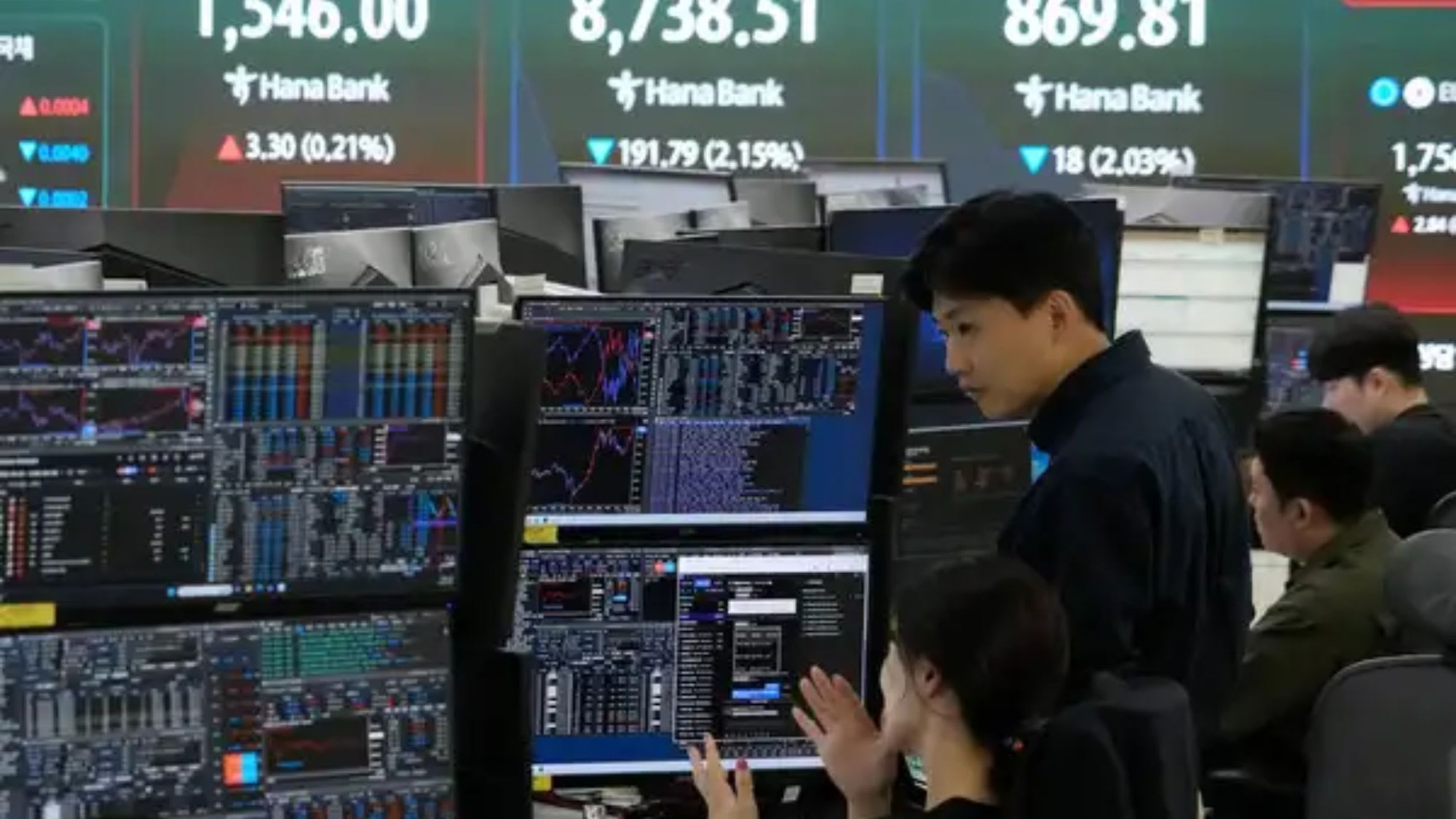
Nearly $50 billion in foreign equity outflows highlight growing concerns about the rising costs of global artificial intelligence investments. Although demand for AI chips, computing systems, and data centre capacity remains strong, investors are questioning future financial returns.
Technology companies face increasing pressure to prove that their AI investments can generate enough revenue to cover rising costs. Possible changes to US AI regulations have added uncertainty, particularly for Asian economies reliant on semiconductor production and technology exports.
Another $22.6 billion has left Asian equity markets in November so far, adding pressure on regional stock markets. Investors will closely watch AI infrastructure spending, corporate earnings, US regulations, and broader market conditions before making investment decisions.
The recent foreign investor withdrawals do not necessarily signal weaker long-term demand for AI technologies and infrastructure. However, the sell-off suggests investors are becoming more cautious about companies exposed to the global AI boom.


