
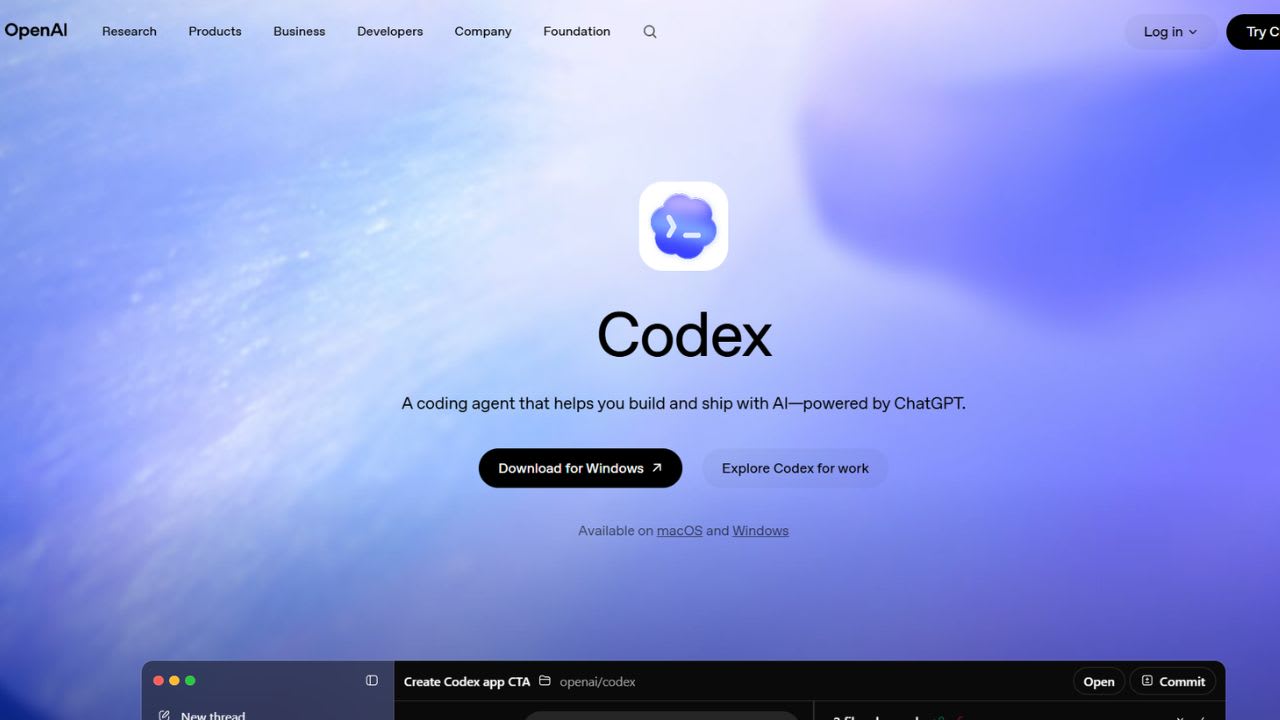
What is OpenAI Codex?
OpenAI Codex is an AI coding agent built to help software developers write and manage code more efficiently. It converts simple, natural language instructions into working code across multiple programming languages. Developers use it to handle everyday tasks such as building features, fixing bugs, updating existing code, and generating documentation. This helps reduce repetitive work and speeds up development.
Codex can be accessed through a desktop app, IDE plugins, terminal, or the web, and easily integrates with existing development environments. While it provides helpful suggestions and automates tasks, developers always stay in control of the final output. It can also guide complex code changes by suggesting clear, logical steps, making refactoring easier.
The codex-1 model is trained on real coding tasks and generates human-like patches. Millions of developers use Codex weekly, and companies like Virgin Atlantic, Ramp, Notion, Cisco, and Rakuten use it in production. For individual developers, it works like a tireless teammate handling routine work and freeing up time for more complex problems.
Top 5 Key Features of OpenAI Codex:
- Multi-Agent Workflows: Codex runs multiple tasks at once using built-in worktrees and cloud environments. Different agents handle separate parts of a project at the same time. This setup compresses work that would normally take days into a single session.
- Custom Skills: Codex uses Skills to extend work beyond code generation. Skills handle tasks like documentation, prototyping, and code review. Developers use prebuilt Skills or define their own to match team standards. Codex follows these rules during tasks.
- Background Automations: Codex handles tasks like issue sorting, alert tracking, and CI/CD workflows on its own. Codex can pick up a failed CI run overnight and have a fix ready by morning, so the team is not blocked when work resumes.
- Integrated Code Review: Codex checks pull requests for bugs, errors, and compatibility issues. It flags backward compatibility issues that often slip past human reviewers.
- Cross-Platform Access: Codex works across IDEs, the terminal, desktop app, and web. A single account keeps tools connected. Developers switch tools without losing context.
OpenAI Codex FAQs
Similar Tools like OpenAI Codex

Pieces acts like a memory layer that runs directly on your computer. It tracks activity across browsers, code …

Cheat Layer is an AI-powered coding assistant tool designed to solve complex business automation problems. It …

Spellbox is an AI programming assistant tool that uses artificial intelligence to assist developers in coding.…

Cody is a coding assistant from Sourcegraph that plugs directly into your IDE. It runs inside VS Code, JetBrai…

AI Code Converter is a versatile tool designed to transform natural language or existing code into the syntax …

Devin is an autonomous AI coding agent built by Cognition Labs. It works more like a full software engineer th…

v0 by Vercel is a collaborative assistant that helps you build full-stack apps, agents, and websites through n…

Amazon Q Developer is a coding assistant from AWS. It can write code, fix bugs, and refactor code inside your …
Ready to try OpenAI Codex?
Discover what OpenAI Codex can do for you.
Try OpenAI Codex nowOpenAI Codex reviews from real users
Verified visitor reviews — one per person, edits welcome.
Loading reviews…